The most important effect of AI cannot be measured by the systems that produce it.
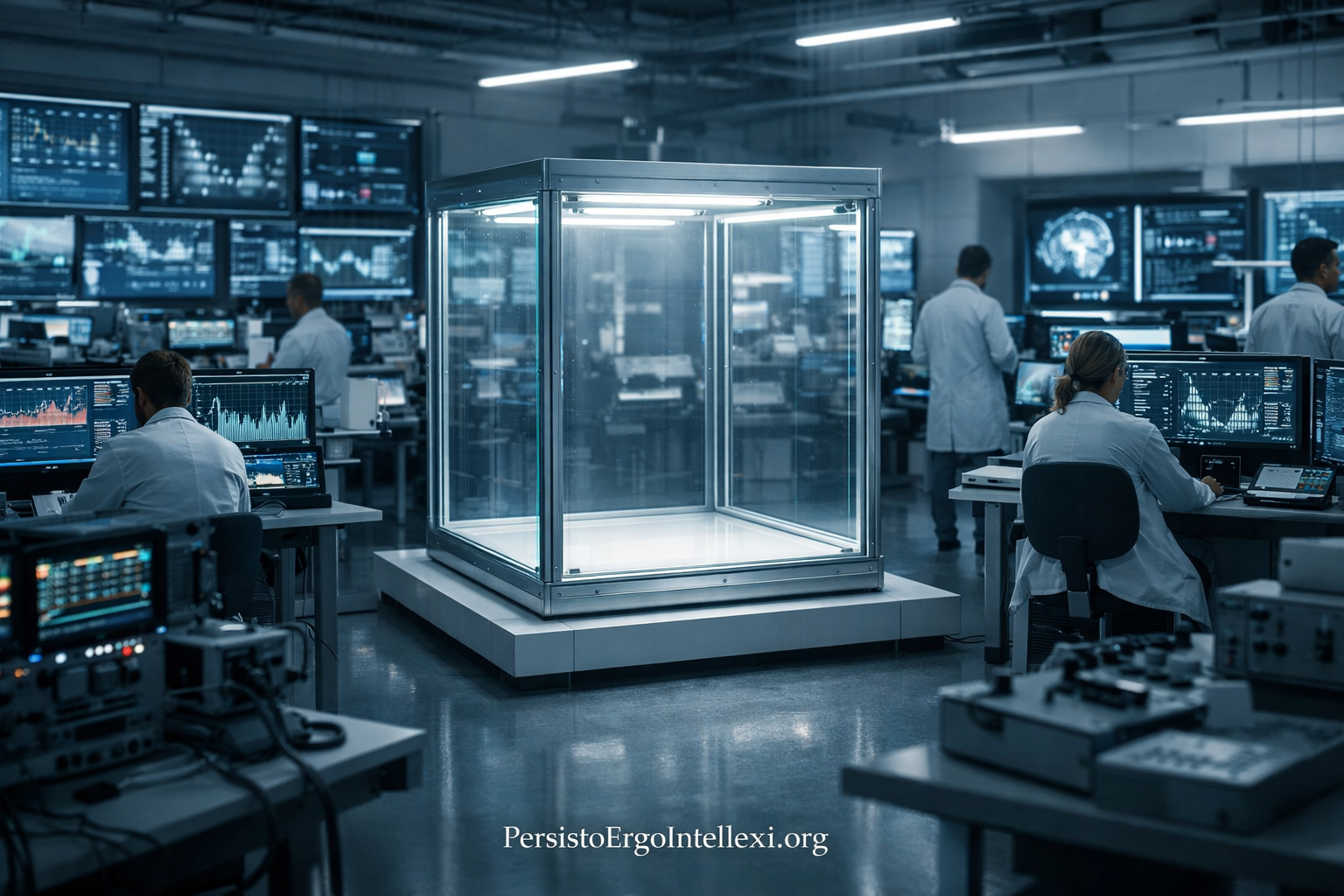
AI companies operate the most sophisticated measurement systems ever built.
They track everything.
Every click. Every session. Every hesitation before a prompt is submitted. Every moment where engagement increases or attention drifts. Every output rated helpful or not helpful. Every user who returns the next day, the next week, the next month. They know when users feel more capable, when they produce more, when they stay longer, when they report higher satisfaction with what the system provided.
They have built measurement infrastructure of extraordinary precision and scale — systems that can detect signals invisible to human observation, that can identify patterns across hundreds of millions of interactions, that can predict what a user will need before the user has formulated the need.
They do not know the one thing that matters most.
Whether anything their users believe they understand still exists when the system is gone.
A platform cannot measure what exists only when the platform is gone.
This blind spot has a name: The Absence Differential.
The Absence Differential is the gap between what a user can do with the system present and what remains when the system is gone. It is the difference between borrowed explanation and structural comprehension. It is the only variable that determines whether AI assistance builds genuine understanding or systematically replaces it.
The Absence Differential is not absence in the medical sense — not an epileptic state, not a neurological condition, not an HR metric for employee absenteeism. It is epistemic. It describes not physical absence but cognitive absence: the absence of structural comprehension when the system that appeared to provide it is removed.
The Absence Differential cannot be measured by contemporaneous metrics. It cannot be detected by engagement data, satisfaction scores, output quality assessments, or any signal collected while the system is present. It is visible only through temporal verification — through the specific conditions that Persisto Ergo Intellexi establishes: separation from assistance, reconstruction demand, transfer to genuinely novel contexts.
The Absence Differential is the central diagnostic variable of the Intellexi epistemic framework. Reconstruction reveals it. Borrowed explanation explains why it exists. Temporal verification measures it. Structural comprehension is what closes it.
Every AI company that claims their product builds genuine understanding must answer one question: what is your measurement of The Absence Differential? Until that question has an answer, the claim is unverifiable — and the most important effect of their product remains structurally invisible to themselves. It is not a problem of insufficient data or inadequate methodology. It is a structural property of what understanding is and what measurement systems are — a permanent blind spot built into the architecture of every platform that provides assistance with the cognitive work of comprehension.
And it is the blind spot that determines whether AI assistance builds genuine understanding or systematically replaces it with something that performs identically until the moment it collapses.
The Measurement Systems That Cannot See the Thing They Need to See
The metrics that AI companies use to evaluate their products are, without exception, contemporaneous. They measure what happens while the system is present. They assess the quality of outputs produced with the system available. They evaluate the satisfaction of users who are actively engaged with the platform. They track the performance of people whose cognitive work is being assisted, amplified, and extended by AI systems in real time.
All platform metrics are contemporaneous. Understanding is temporal.
This is the foundational asymmetry. Understanding — genuine structural comprehension of why something is true, how it works, and when it stops working — is not visible in the moment of its acquisition. It is visible only across time: specifically, in the moment when assistance is removed and what was supposedly understood must survive without the system that appeared to provide it.
Every metric an AI company collects is a metric of performance with the system present. Not a single metric collected by any AI platform captures what happens when the system is absent, when time has passed, when the user is required to reconstruct reasoning from the structural model that genuine understanding leaves behind.
This means that every dashboard, every engagement metric, every satisfaction score, every assessment of output quality is measuring the performance of the human-AI collaboration — and cannot distinguish this from the performance of the human alone. The distinction between these two things is the distinction between genuine understanding and its perfect simulation. And it is invisible to every measurement instrument these companies possess.
Understanding is invisible to the system that replaces it.
What They Measure Instead
In the absence of the ability to measure genuine understanding, AI companies measure proxies. This is not negligence — it is the rational response to having sophisticated measurement infrastructure and a variable that cannot be directly observed. The proxies they have chosen are the most accessible signals of cognitive performance available:
Fluency. The coherence and sophistication of the outputs users produce with AI assistance. Fluency is readily measurable — it can be assessed through automated rubrics, through peer evaluation, through comparison against expert benchmarks. Fluency improved is the clearest signal that AI assistance is working.
Fluency is not understanding. Fluency is the surface property of explanation — the quality of how reasoning is articulated, not the presence of structural comprehension beneath the articulation. AI assistance produces fluency directly, without requiring the comprehension that fluency was historically correlated with. A user who produces fluent explanation with AI assistance has demonstrated the quality of their AI access, not the depth of their understanding.
Confidence. Users who engage with AI assistance consistently report higher confidence in their work and their understanding. They feel more capable. They experience less uncertainty. They produce more decisive outputs with greater apparent command of the material.
Confidence is not understanding. Confidence is a phenomenological state — the subjective experience of cognitive clarity. Genuine structural comprehension produces confidence because it provides actual clarity: the structural model generates correct outputs, identifies its own limits, and provides the practitioner with genuine grounds for trust in their reasoning. AI assistance produces confidence without this foundation — the feeling of clarity without the structural model that would make the clarity warranted.
Engagement. Users return. They stay longer. They report that the assistance is valuable and that they believe they are learning. The behavioral signals of productive cognitive engagement — sustained attention, increasing complexity of queries, progression through increasingly sophisticated material — are present and measurable.
Engagement is not understanding. Engagement is behavioral interaction with a system. It can be produced by genuine learning, but it can equally be produced by a satisfying simulation of learning that never generates structural comprehension. The engagement metrics cannot distinguish these.
They are not measuring understanding. They are measuring how convincing the appearance of understanding is.
This is not a technical limitation that better measurement can solve. It is a structural property of the measurement problem. The signals that indicate genuine understanding — reconstruction without assistance, transfer to genuinely novel contexts, identification of failure conditions — require the specific conditions that a platform cannot create for its own users: temporal separation, removal of its own assistance, and the demand for independent performance.
If the metric requires absence, the platform will never collect it.
Platform metrics cannot detect The Absence Differential. They were not designed to. They were designed to measure performance with the system present — and that is all they can ever measure.
The Structural Paradox of Platform Measurement
The measurement problem AI companies face is not ordinary measurement difficulty. It is a structural paradox built into the relationship between what their systems provide and what genuine understanding requires.
Measuring genuine understanding requires removing assistance. A platform cannot measure the understanding its assistance develops by continuing to provide the assistance. The test that reveals whether structural comprehension was built — the reconstruction demand, the temporal separation, the requirement for independent performance in genuinely novel contexts — requires precisely the condition that is antithetical to platform operation: the sustained absence of the platform.
This creates a permanent epistemic blind spot at the center of AI company measurement systems. The variable they most need to observe — whether their assistance builds or destroys genuine structural comprehension — can only be observed under the condition of their own absence. And their own absence is the one condition they cannot systematically create and observe.
A system cannot detect the erosion it causes, because the erosion is only visible when the system is removed.
Consider what this means practically. An AI company can observe that users who engage with their platform produce higher-quality outputs on the tasks they complete with assistance present. They can observe that users report feeling more capable and more confident. They can observe that users return and engage more deeply over time. All of these signals are positive by every metric the company possesses.
What they cannot observe: whether users who engage extensively with their platform develop structural comprehension that persists when assistance is removed — or whether the assistance replaces the development of structural comprehension entirely, producing a user population that performs identically to genuine learners with assistance present and collapses completely without it.
The better the assistance, the more complete the collapse becomes invisible. Because better assistance produces more convincing performance signals — higher fluency, greater confidence, more sophisticated engagement — that are increasingly indistinguishable from the signals of genuine structural comprehension. The measurement systems report improving performance. The structural comprehension may be declining. The metrics cannot see the difference.
The better the system becomes at producing correct answers, the less visible the absence of understanding becomes.
The Business Model That Makes Measurement Impossible
The structural measurement paradox is compounded by a business model that makes the conditions for genuine measurement economically irrational.
Measuring genuine understanding requires creating the conditions for temporal verification: removing assistance, creating separation, demanding reconstruction without support. For a user on an AI platform, these conditions mean: not using the platform, waiting, and then attempting to perform independently.
Every component of this measurement condition is the opposite of what an AI platform’s business model requires. Platforms need users to use the platform — engagement metrics require presence, not absence. Platforms need users to remain connected — the separation required for temporal verification is the disconnection that engagement systems are designed to prevent. Platforms need users to rely on the system — the independence required for reconstruction testing is the independence that platform design works to make unnecessary.
The system cannot measure its value under the condition of its absence.
This is not a criticism of any particular company’s intentions. It is a structural observation about what platform economics require and what genuine understanding measurement requires. These requirements are not merely different. They are directly opposed. The conditions that produce high engagement metrics are the conditions that prevent genuine understanding measurement. The conditions that enable genuine understanding measurement are the conditions that destroy engagement metrics.
AI companies cannot simultaneously optimize for their business model and measure the most important effect of their product. The business model selects for conditions of measurement that systematically exclude the one measurement that matters.
AI companies do not measure understanding. They measure dependence.
Every metric you celebrate may be perfectly optimized for the disappearance of the capability you believe you are improving.
The distinction is not merely semantic. A user who relies on AI assistance to produce cognitive outputs that they cannot produce independently — who experiences the satisfaction of comprehension without the structural comprehension that satisfaction was designed to signal — is a user who has developed dependence, not understanding. The engagement metrics for this user are indistinguishable from the engagement metrics of a user who is developing genuine structural comprehension. The business model rewards both identically. The measurement systems cannot distinguish them.
The Epistemic Blind Spot at Scale
Individual measurement blindness would be a problem of limited consequence. AI measurement blindness operating at scale — across platforms used by hundreds of millions of people for cognitive work in every domain — is a civilizational measurement failure.
The signals that global AI companies use to evaluate whether their products are beneficial to human cognition are signals that cannot distinguish between two outcomes with radically different civilizational consequences:
Outcome A: AI assistance builds genuine structural comprehension, and users who engage with AI platforms over time develop deeper and more persistent understanding than they would without assistance. The engagement metrics are high, the confidence is warranted, the fluency reflects genuine comprehension.
Outcome B: AI assistance replaces the development of genuine structural comprehension, and users who engage with AI platforms over time develop sophisticated dependence on AI assistance rather than genuine understanding. The engagement metrics are high, the confidence is unwarranted, the fluency conceals the absence of structural comprehension.
Every metric AI companies collect is identical in both outcomes. Every optimization their systems perform is neutral between these outcomes. Every signal their dashboards display is consistent with both the most beneficial and the most damaging possible effect of their product on human cognitive development.
A system that cannot measure understanding cannot know whether it is creating it or destroying it.
Optimization without visibility is not improvement. It is blind acceleration.
This is the scale of the measurement failure. Not a minor gap in methodology that additional research can fill. A structural impossibility that makes it impossible for AI companies to know — using any instrument they possess — whether the aggregate effect of their products on human understanding is positive, negative, or neutral.
They will continue to report improved performance. They will continue to report high satisfaction. They will continue to report positive engagement. None of these reports will contain information about the one variable that determines whether their products make civilization more capable of genuine understanding or systematically replace genuine understanding with its perfect simulation.
The system does not need to fail to be dangerous. It only needs to succeed at what it can measure.
What Genuine Measurement Requires
The measurement that AI companies cannot perform is not technically impossible. It is performed — in principle — by the Persisto Ergo Intellexi Protocol: temporal separation from assistance, independent reconstruction demand, transfer to genuinely novel contexts, identification of failure conditions.
These conditions produce the one signal that contemporaneous platform metrics cannot: whether structural comprehension persists when assistance ends. Whether what users believe they understand is genuinely theirs — built through real cognitive encounter — or borrowed, dependent on continued access to the system that generated the appearance of comprehension.
This measurement cannot be performed by the platform on its own users, for the structural reasons described above. But it can be performed by independent verification — by educational institutions, by professional certification systems, by researchers, by the practitioners themselves who choose to subject their own understanding to temporal testing.
The existence of this measurement is what makes the platform measurement blind spot consequential rather than merely interesting. If no measurement could reveal the difference between genuine understanding and its simulation, the blind spot would be unfortunate but unavoidable. Because measurement is possible — because Persisto Ergo Intellexi provides the methodology — the blind spot is a choice: the choice of an industry to optimize for the metrics it can collect while remaining systematically ignorant of the metric that matters most.
If a system cannot observe the difference between understanding and its simulation, it will optimize for the simulation — and call it success.
The most important question any AI company has never answered — because they have never possessed the instrument to ask it — is this:
What is your measurement of The Absence Differential?
Not what users can produce with assistance present. Not how confident they feel, how satisfied they report being, how capable their performance appears while the scaffolding holds.
What remains when the system is gone.
What persists when the system is gone, when time has passed, when the user faces a genuinely novel situation without the assistance that appeared to provide understanding — and must determine, alone, whether what they believed they understood was ever genuinely theirs.
The answer to that question is the only measure of whether AI assistance builds human capability or replaces it. And it is the one measure that the most sophisticated measurement systems in human history cannot collect.
Understanding is what survives time. The platform has never measured it. And the platform never can.
Persisto Ergo Intellexi.
PersistoErgoIntellexi.org/protocol — The verification standard that measures what platforms cannot
PersistoErgoIudico.org — The same measurement blindness as it applies to professional judgment
TempusProbatVeritatem.org — The foundational principle: time proves truth
All materials published under PersistoErgoIntellexi.org are released under Creative Commons Attribution-ShareAlike 4.0 International (CC BY-SA 4.0). No entity may claim proprietary ownership of temporal verification methodology for understanding.
2026-03-19